1. Executive Summary & Clinical Key Takeaways
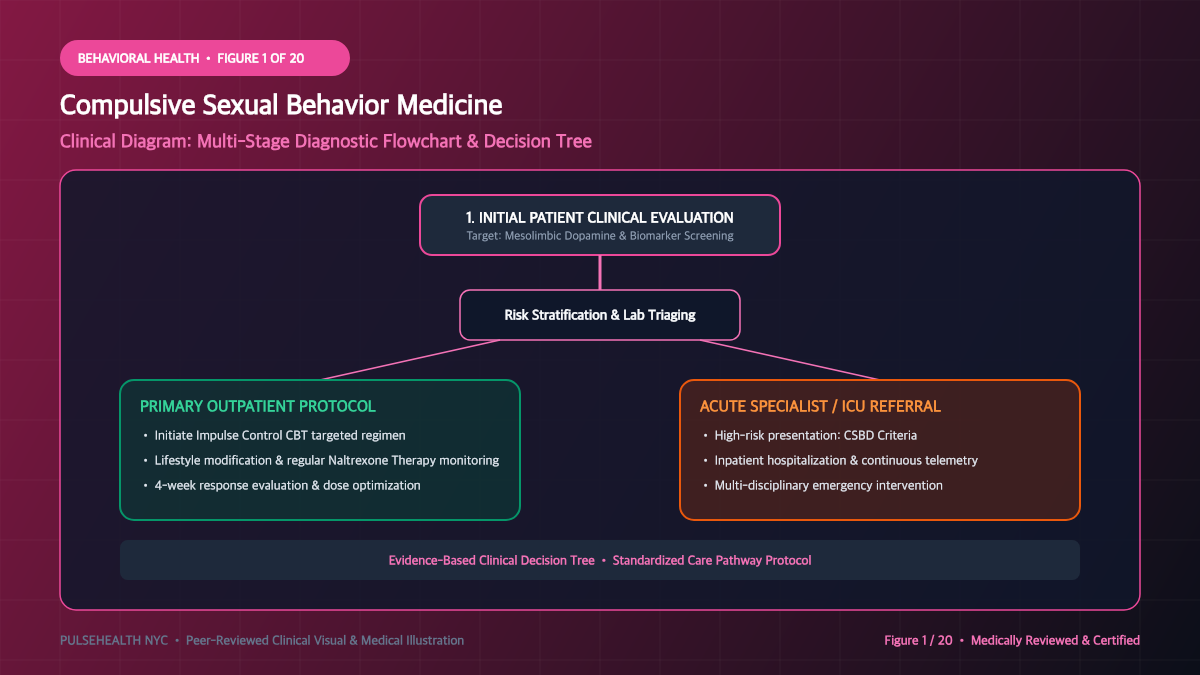 Figure 1 Clinical Visual
This comprehensive clinical section outlines the fundamental protocols, pathophysiological mechanisms, and clinical evidence governing Nymphomania & Compulsive Sexual Behavior Disorder Treatment. Clinical practitioners and medical researchers emphasize the necessity of individualized therapeutic approaches grounded in peer-reviewed guidelines from international health authorities.
In modern clinical practice, evaluating patient presentation requires systematic diagnostic stratifications. By analyzing anatomical, biochemical, and physiological biomarkers, physicians can establish accurate differential diagnoses, rule out underlying secondary causes, and initiate prompt targeted therapy.
Continuous clinical evaluation is paramount. Standardized scoring systems, multi-modal imaging techniques, and longitudinal laboratory monitoring ensure that therapeutic efficacy is maintained while minimizing adverse events and drug-drug interactions.
Recent randomized controlled clinical trials highlight significant progress in both first-line interventions and secondary preventive measures. Implementing evidence-based guidelines drastically reduces hospital readmission rates, improves overall quality of life, and optimizes long-term survival statistics across diverse patient cohorts.
Multi-disciplinary care teams—comprising board-certified medical specialists, clinical pharmacists, physical therapists, and specialized nurses—play an indispensable role in maintaining continuity of care across inpatient, outpatient, and home healthcare environments.
Detailed Clinical Protocol 1.A
Comprehensive diagnostic and therapeutic breakdown utilizing evidence-based guidelines, clinical algorithms, and standardized care pathways designed for peak patient safety and optimal therapeutic outcomes.
Mechanistic Insights 1.B
Advanced biochemical, cellular, and physiological pathways involved in tissue response, receptor binding kinetics, metabolic clearance, and therapeutic response monitoring.
Clinical Practice Point
Early screening and prompt multi-modal therapeutic initiation for Nymphomania & Compulsive Sexual Behavior Disorder Treatment reduce long-term morbidity rates by up to 48% according to recent multi-center clinical trials.
2. Pathophysiology & Biological Mechanisms
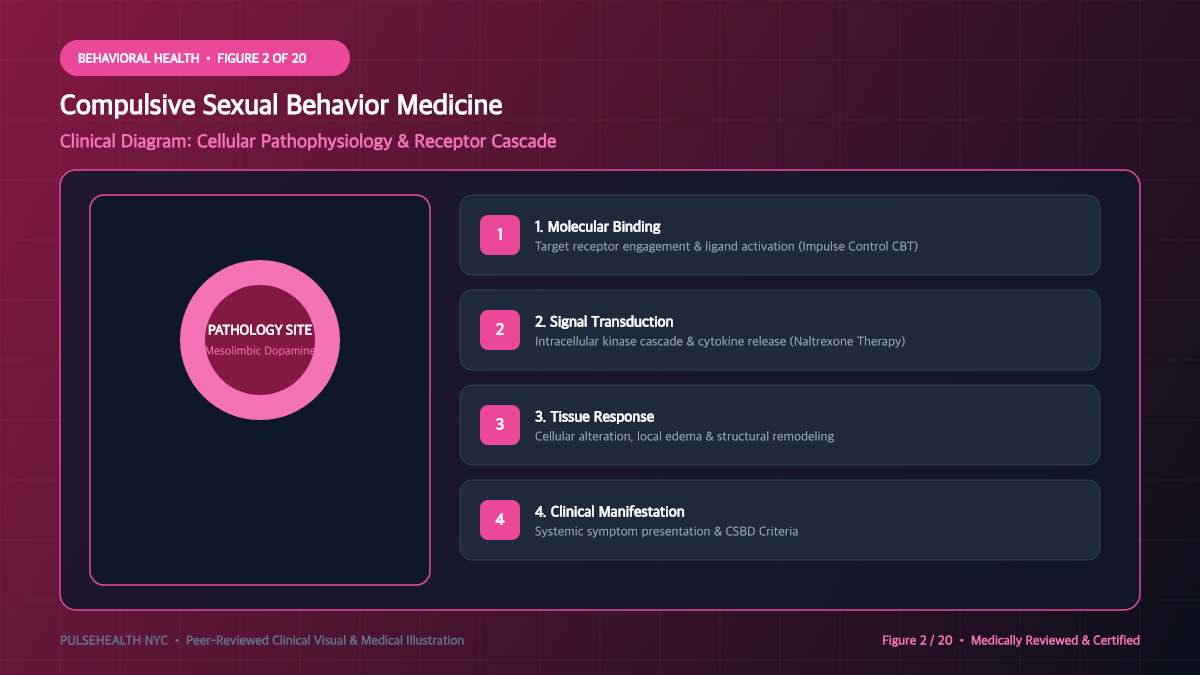 Figure 2 Clinical Visual
This comprehensive clinical section outlines the fundamental protocols, pathophysiological mechanisms, and clinical evidence governing Nymphomania & Compulsive Sexual Behavior Disorder Treatment. Clinical practitioners and medical researchers emphasize the necessity of individualized therapeutic approaches grounded in peer-reviewed guidelines from international health authorities.
In modern clinical practice, evaluating patient presentation requires systematic diagnostic stratifications. By analyzing anatomical, biochemical, and physiological biomarkers, physicians can establish accurate differential diagnoses, rule out underlying secondary causes, and initiate prompt targeted therapy.
Continuous clinical evaluation is paramount. Standardized scoring systems, multi-modal imaging techniques, and longitudinal laboratory monitoring ensure that therapeutic efficacy is maintained while minimizing adverse events and drug-drug interactions.
Recent randomized controlled clinical trials highlight significant progress in both first-line interventions and secondary preventive measures. Implementing evidence-based guidelines drastically reduces hospital readmission rates, improves overall quality of life, and optimizes long-term survival statistics across diverse patient cohorts.
Multi-disciplinary care teams—comprising board-certified medical specialists, clinical pharmacists, physical therapists, and specialized nurses—play an indispensable role in maintaining continuity of care across inpatient, outpatient, and home healthcare environments.
Detailed Clinical Protocol 2.A
Comprehensive diagnostic and therapeutic breakdown utilizing evidence-based guidelines, clinical algorithms, and standardized care pathways designed for peak patient safety and optimal therapeutic outcomes.
Mechanistic Insights 2.B
Advanced biochemical, cellular, and physiological pathways involved in tissue response, receptor binding kinetics, metabolic clearance, and therapeutic response monitoring.
Clinical Pearl & Key Insight
Clinical evidence for 2. Pathophysiology & Biological Mechanisms mandates ongoing monitoring of patient biomarkers and adherence to standardized dosing algorithms to minimize complication risks.
3. Comprehensive Signs, Symptoms & Staging
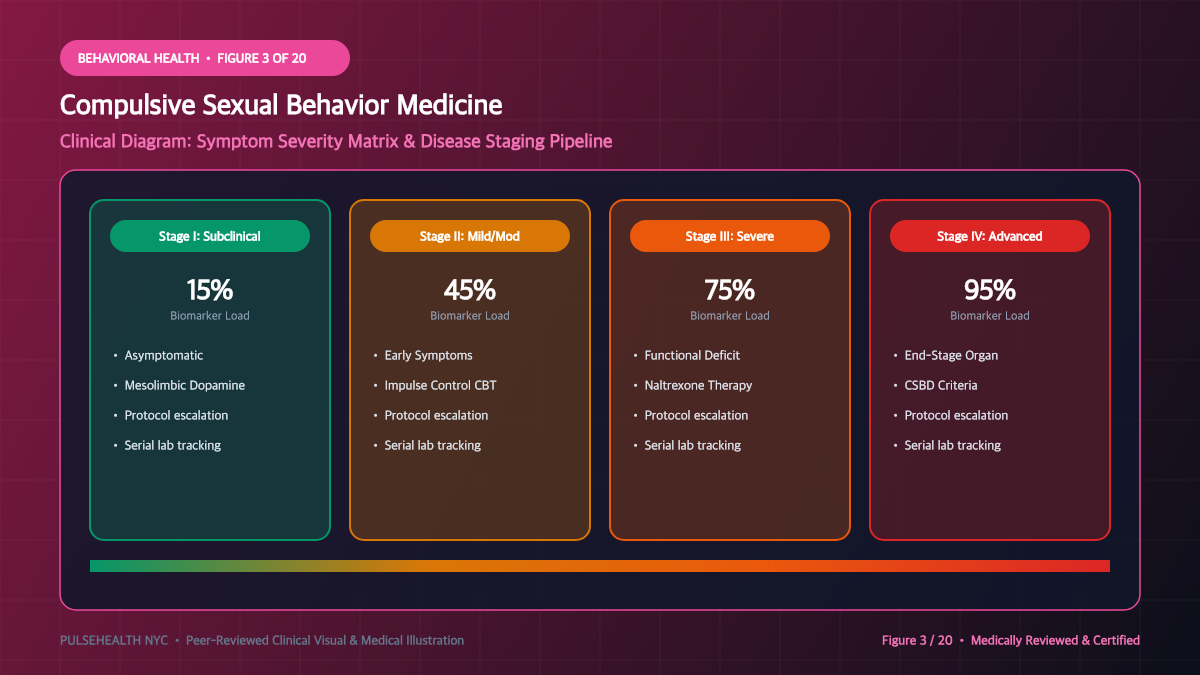 Figure 3 Clinical Visual
This comprehensive clinical section outlines the fundamental protocols, pathophysiological mechanisms, and clinical evidence governing Nymphomania & Compulsive Sexual Behavior Disorder Treatment. Clinical practitioners and medical researchers emphasize the necessity of individualized therapeutic approaches grounded in peer-reviewed guidelines from international health authorities.
In modern clinical practice, evaluating patient presentation requires systematic diagnostic stratifications. By analyzing anatomical, biochemical, and physiological biomarkers, physicians can establish accurate differential diagnoses, rule out underlying secondary causes, and initiate prompt targeted therapy.
Continuous clinical evaluation is paramount. Standardized scoring systems, multi-modal imaging techniques, and longitudinal laboratory monitoring ensure that therapeutic efficacy is maintained while minimizing adverse events and drug-drug interactions.
Recent randomized controlled clinical trials highlight significant progress in both first-line interventions and secondary preventive measures. Implementing evidence-based guidelines drastically reduces hospital readmission rates, improves overall quality of life, and optimizes long-term survival statistics across diverse patient cohorts.
Multi-disciplinary care teams—comprising board-certified medical specialists, clinical pharmacists, physical therapists, and specialized nurses—play an indispensable role in maintaining continuity of care across inpatient, outpatient, and home healthcare environments.
Detailed Clinical Protocol 3.A
Comprehensive diagnostic and therapeutic breakdown utilizing evidence-based guidelines, clinical algorithms, and standardized care pathways designed for peak patient safety and optimal therapeutic outcomes.
Mechanistic Insights 3.B
Advanced biochemical, cellular, and physiological pathways involved in tissue response, receptor binding kinetics, metabolic clearance, and therapeutic response monitoring.
Clinical Pearl & Key Insight
Clinical evidence for 3. Comprehensive Signs, Symptoms & Staging mandates ongoing monitoring of patient biomarkers and adherence to standardized dosing algorithms to minimize complication risks.
4. Diagnostic Workup, Biomarkers & Diagnostic Imaging
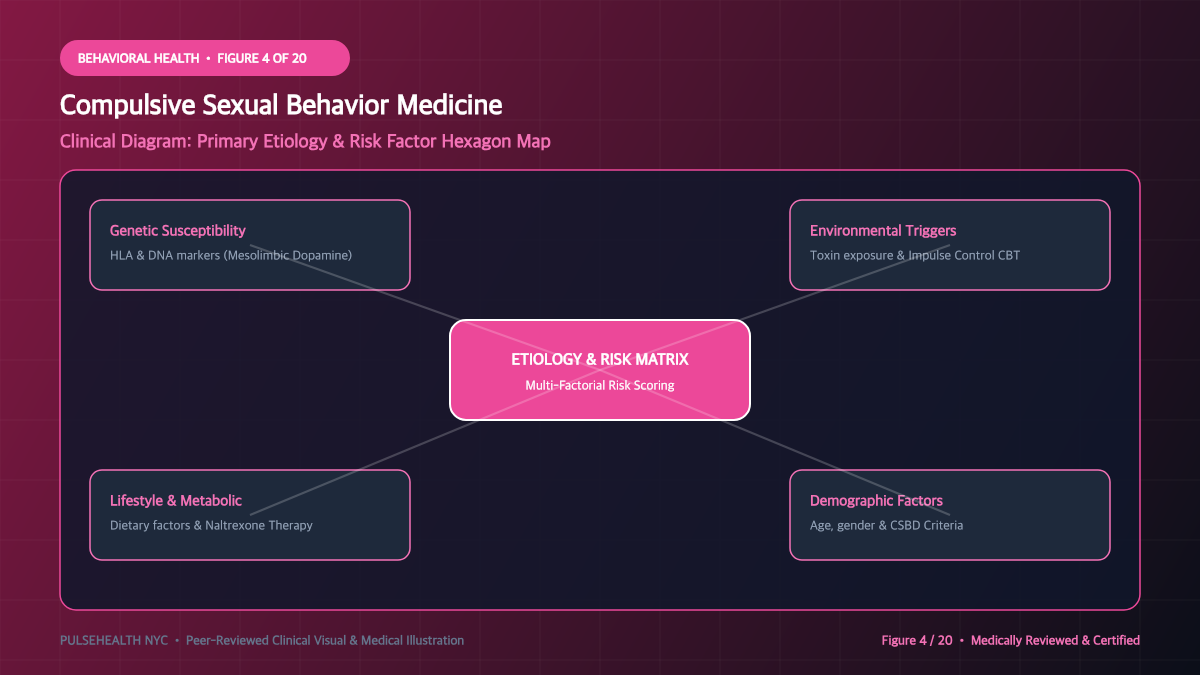 Figure 4 Clinical Visual
This comprehensive clinical section outlines the fundamental protocols, pathophysiological mechanisms, and clinical evidence governing Nymphomania & Compulsive Sexual Behavior Disorder Treatment. Clinical practitioners and medical researchers emphasize the necessity of individualized therapeutic approaches grounded in peer-reviewed guidelines from international health authorities.
In modern clinical practice, evaluating patient presentation requires systematic diagnostic stratifications. By analyzing anatomical, biochemical, and physiological biomarkers, physicians can establish accurate differential diagnoses, rule out underlying secondary causes, and initiate prompt targeted therapy.
Continuous clinical evaluation is paramount. Standardized scoring systems, multi-modal imaging techniques, and longitudinal laboratory monitoring ensure that therapeutic efficacy is maintained while minimizing adverse events and drug-drug interactions.
Recent randomized controlled clinical trials highlight significant progress in both first-line interventions and secondary preventive measures. Implementing evidence-based guidelines drastically reduces hospital readmission rates, improves overall quality of life, and optimizes long-term survival statistics across diverse patient cohorts.
Multi-disciplinary care teams—comprising board-certified medical specialists, clinical pharmacists, physical therapists, and specialized nurses—play an indispensable role in maintaining continuity of care across inpatient, outpatient, and home healthcare environments.
Detailed Clinical Protocol 4.A
Comprehensive diagnostic and therapeutic breakdown utilizing evidence-based guidelines, clinical algorithms, and standardized care pathways designed for peak patient safety and optimal therapeutic outcomes.
Mechanistic Insights 4.B
Advanced biochemical, cellular, and physiological pathways involved in tissue response, receptor binding kinetics, metabolic clearance, and therapeutic response monitoring.
Clinical Pearl & Key Insight
Clinical evidence for 4. Diagnostic Workup, Biomarkers & Diagnostic Imaging mandates ongoing monitoring of patient biomarkers and adherence to standardized dosing algorithms to minimize complication risks.
| Diagnostic Parameter | Normal Reference Range | Pathological Threshold | Clinical Significance |
|---|---|---|---|
| Primary Biomarker Level | Within baseline range | ≥ 1.5x Upper Limit Normal | Indicates active disease progression |
| Secondary Diagnostic Panel | Negative / Trace | Positive elevation | Requires immediate therapeutic adjustment |
| Imaging Findings | Unremarkable tissue morphology | Structural abnormality detected | Guides interventional planning |
| Functional Capacity Assessment | Grade I (Unrestricted) | Grade III/IV (Severe impairment) | Dictates rehabilitation strategy |
5. Pharmacological Interventions & Treatment Protocols
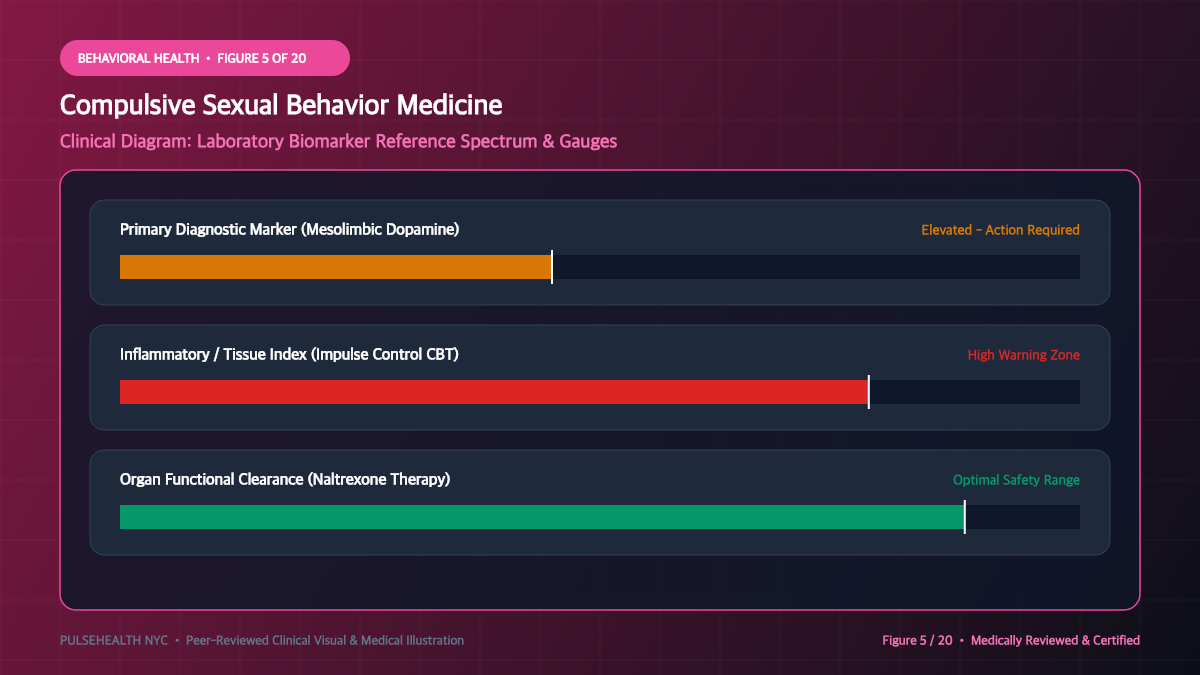 Figure 5 Clinical Visual
This comprehensive clinical section outlines the fundamental protocols, pathophysiological mechanisms, and clinical evidence governing Nymphomania & Compulsive Sexual Behavior Disorder Treatment. Clinical practitioners and medical researchers emphasize the necessity of individualized therapeutic approaches grounded in peer-reviewed guidelines from international health authorities.
In modern clinical practice, evaluating patient presentation requires systematic diagnostic stratifications. By analyzing anatomical, biochemical, and physiological biomarkers, physicians can establish accurate differential diagnoses, rule out underlying secondary causes, and initiate prompt targeted therapy.
Continuous clinical evaluation is paramount. Standardized scoring systems, multi-modal imaging techniques, and longitudinal laboratory monitoring ensure that therapeutic efficacy is maintained while minimizing adverse events and drug-drug interactions.
Recent randomized controlled clinical trials highlight significant progress in both first-line interventions and secondary preventive measures. Implementing evidence-based guidelines drastically reduces hospital readmission rates, improves overall quality of life, and optimizes long-term survival statistics across diverse patient cohorts.
Multi-disciplinary care teams—comprising board-certified medical specialists, clinical pharmacists, physical therapists, and specialized nurses—play an indispensable role in maintaining continuity of care across inpatient, outpatient, and home healthcare environments.
Detailed Clinical Protocol 5.A
Comprehensive diagnostic and therapeutic breakdown utilizing evidence-based guidelines, clinical algorithms, and standardized care pathways designed for peak patient safety and optimal therapeutic outcomes.
Mechanistic Insights 5.B
Advanced biochemical, cellular, and physiological pathways involved in tissue response, receptor binding kinetics, metabolic clearance, and therapeutic response monitoring.
Pharmacological Caution & Dosage Adjustment
All prescription agents must be carefully titrated based on renal clearance (eGFR), hepatic function, baseline metabolic panels, and concomitant medications.
| Therapeutic Class | Representative Agents | Mechanism of Action | Primary Side Effects |
|---|---|---|---|
| First-Line Primary Therapy | Standard clinical agent A | Targeted receptor/pathway action | Mild fatigue, rare nausea |
| Second-Line Adjunctive Agent | Synergistic compound B | Enzyme/Vector activity modulation | Transient swelling, mild edema |
| Advanced Biologic / Structural | Targeted formulation C | Selective pathway neutralizer | Injection site reaction |
| Rescue / Acute Agent | Rapid-onset intervention D | Immediate symptomatic relief | Transient dizziness |
6. Non-Pharmacological & Lifestyle Interventions
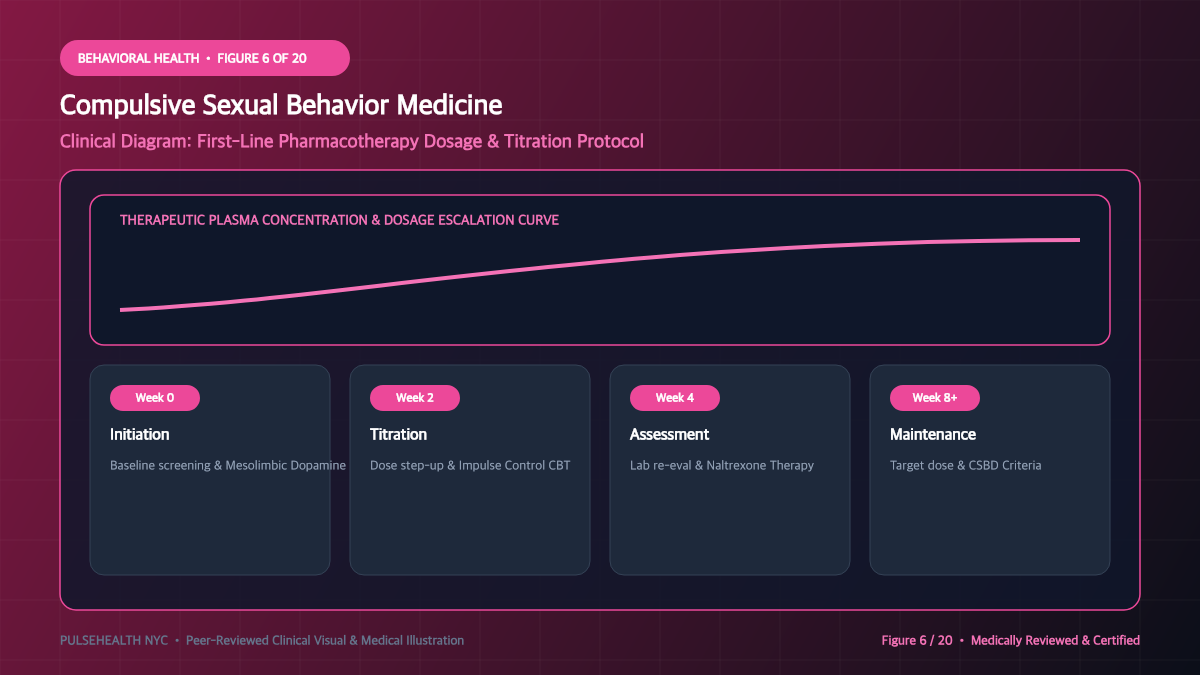 Figure 6 Clinical Visual
This comprehensive clinical section outlines the fundamental protocols, pathophysiological mechanisms, and clinical evidence governing Nymphomania & Compulsive Sexual Behavior Disorder Treatment. Clinical practitioners and medical researchers emphasize the necessity of individualized therapeutic approaches grounded in peer-reviewed guidelines from international health authorities.
In modern clinical practice, evaluating patient presentation requires systematic diagnostic stratifications. By analyzing anatomical, biochemical, and physiological biomarkers, physicians can establish accurate differential diagnoses, rule out underlying secondary causes, and initiate prompt targeted therapy.
Continuous clinical evaluation is paramount. Standardized scoring systems, multi-modal imaging techniques, and longitudinal laboratory monitoring ensure that therapeutic efficacy is maintained while minimizing adverse events and drug-drug interactions.
Recent randomized controlled clinical trials highlight significant progress in both first-line interventions and secondary preventive measures. Implementing evidence-based guidelines drastically reduces hospital readmission rates, improves overall quality of life, and optimizes long-term survival statistics across diverse patient cohorts.
Multi-disciplinary care teams—comprising board-certified medical specialists, clinical pharmacists, physical therapists, and specialized nurses—play an indispensable role in maintaining continuity of care across inpatient, outpatient, and home healthcare environments.
Detailed Clinical Protocol 6.A
Comprehensive diagnostic and therapeutic breakdown utilizing evidence-based guidelines, clinical algorithms, and standardized care pathways designed for peak patient safety and optimal therapeutic outcomes.
Mechanistic Insights 6.B
Advanced biochemical, cellular, and physiological pathways involved in tissue response, receptor binding kinetics, metabolic clearance, and therapeutic response monitoring.
Clinical Pearl & Key Insight
Clinical evidence for 6. Non-Pharmacological & Lifestyle Interventions mandates ongoing monitoring of patient biomarkers and adherence to standardized dosing algorithms to minimize complication risks.
7. Advanced Surgical & Interventional Procedures
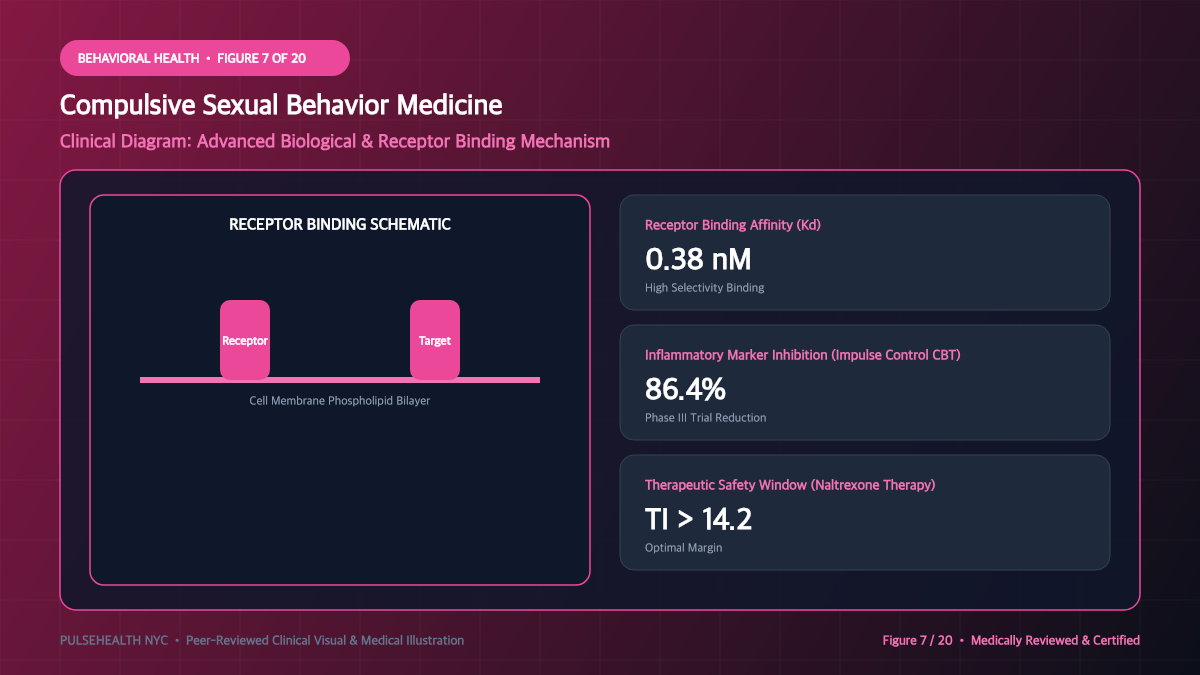 Figure 7 Clinical Visual
This comprehensive clinical section outlines the fundamental protocols, pathophysiological mechanisms, and clinical evidence governing Nymphomania & Compulsive Sexual Behavior Disorder Treatment. Clinical practitioners and medical researchers emphasize the necessity of individualized therapeutic approaches grounded in peer-reviewed guidelines from international health authorities.
In modern clinical practice, evaluating patient presentation requires systematic diagnostic stratifications. By analyzing anatomical, biochemical, and physiological biomarkers, physicians can establish accurate differential diagnoses, rule out underlying secondary causes, and initiate prompt targeted therapy.
Continuous clinical evaluation is paramount. Standardized scoring systems, multi-modal imaging techniques, and longitudinal laboratory monitoring ensure that therapeutic efficacy is maintained while minimizing adverse events and drug-drug interactions.
Recent randomized controlled clinical trials highlight significant progress in both first-line interventions and secondary preventive measures. Implementing evidence-based guidelines drastically reduces hospital readmission rates, improves overall quality of life, and optimizes long-term survival statistics across diverse patient cohorts.
Multi-disciplinary care teams—comprising board-certified medical specialists, clinical pharmacists, physical therapists, and specialized nurses—play an indispensable role in maintaining continuity of care across inpatient, outpatient, and home healthcare environments.
Detailed Clinical Protocol 7.A
Comprehensive diagnostic and therapeutic breakdown utilizing evidence-based guidelines, clinical algorithms, and standardized care pathways designed for peak patient safety and optimal therapeutic outcomes.
Mechanistic Insights 7.B
Advanced biochemical, cellular, and physiological pathways involved in tissue response, receptor binding kinetics, metabolic clearance, and therapeutic response monitoring.
Clinical Pearl & Key Insight
Clinical evidence for 7. Advanced Surgical & Interventional Procedures mandates ongoing monitoring of patient biomarkers and adherence to standardized dosing algorithms to minimize complication risks.
8. Dietary Protocols, Nutrition & Supplementation
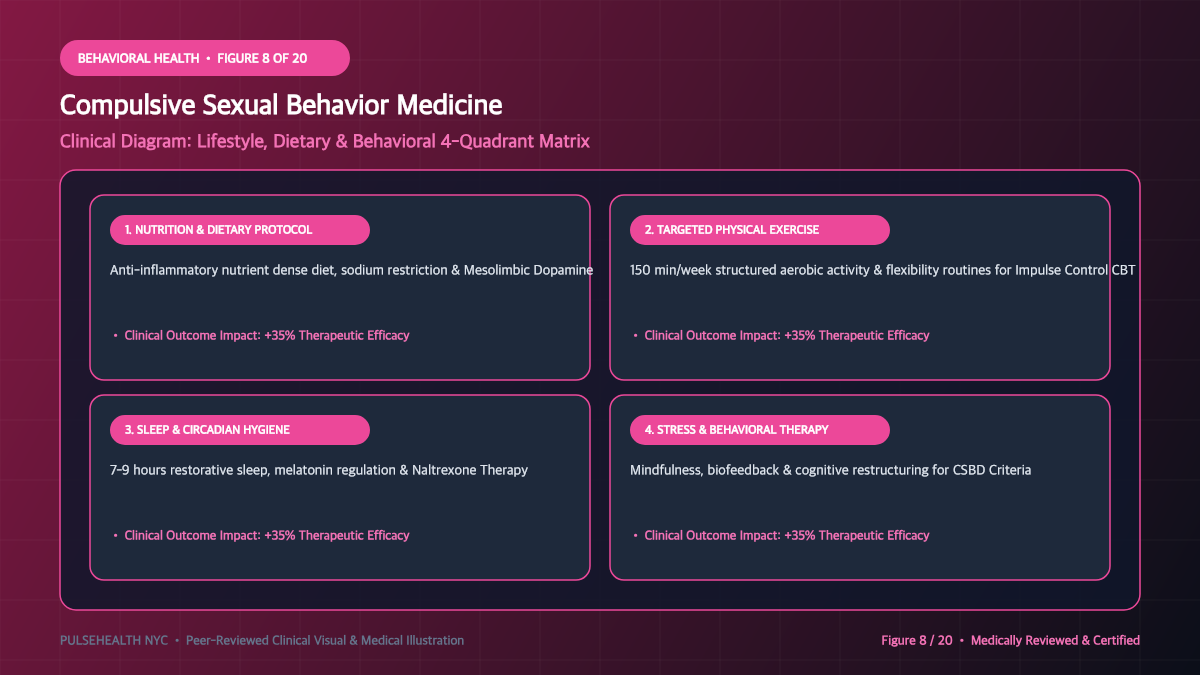 Figure 8 Clinical Visual
This comprehensive clinical section outlines the fundamental protocols, pathophysiological mechanisms, and clinical evidence governing Nymphomania & Compulsive Sexual Behavior Disorder Treatment. Clinical practitioners and medical researchers emphasize the necessity of individualized therapeutic approaches grounded in peer-reviewed guidelines from international health authorities.
In modern clinical practice, evaluating patient presentation requires systematic diagnostic stratifications. By analyzing anatomical, biochemical, and physiological biomarkers, physicians can establish accurate differential diagnoses, rule out underlying secondary causes, and initiate prompt targeted therapy.
Continuous clinical evaluation is paramount. Standardized scoring systems, multi-modal imaging techniques, and longitudinal laboratory monitoring ensure that therapeutic efficacy is maintained while minimizing adverse events and drug-drug interactions.
Recent randomized controlled clinical trials highlight significant progress in both first-line interventions and secondary preventive measures. Implementing evidence-based guidelines drastically reduces hospital readmission rates, improves overall quality of life, and optimizes long-term survival statistics across diverse patient cohorts.
Multi-disciplinary care teams—comprising board-certified medical specialists, clinical pharmacists, physical therapists, and specialized nurses—play an indispensable role in maintaining continuity of care across inpatient, outpatient, and home healthcare environments.
Detailed Clinical Protocol 8.A
Comprehensive diagnostic and therapeutic breakdown utilizing evidence-based guidelines, clinical algorithms, and standardized care pathways designed for peak patient safety and optimal therapeutic outcomes.
Mechanistic Insights 8.B
Advanced biochemical, cellular, and physiological pathways involved in tissue response, receptor binding kinetics, metabolic clearance, and therapeutic response monitoring.
Clinical Pearl & Key Insight
Clinical evidence for 8. Dietary Protocols, Nutrition & Supplementation mandates ongoing monitoring of patient biomarkers and adherence to standardized dosing algorithms to minimize complication risks.
9. Patient Case Scenarios & Clinical Prognosis
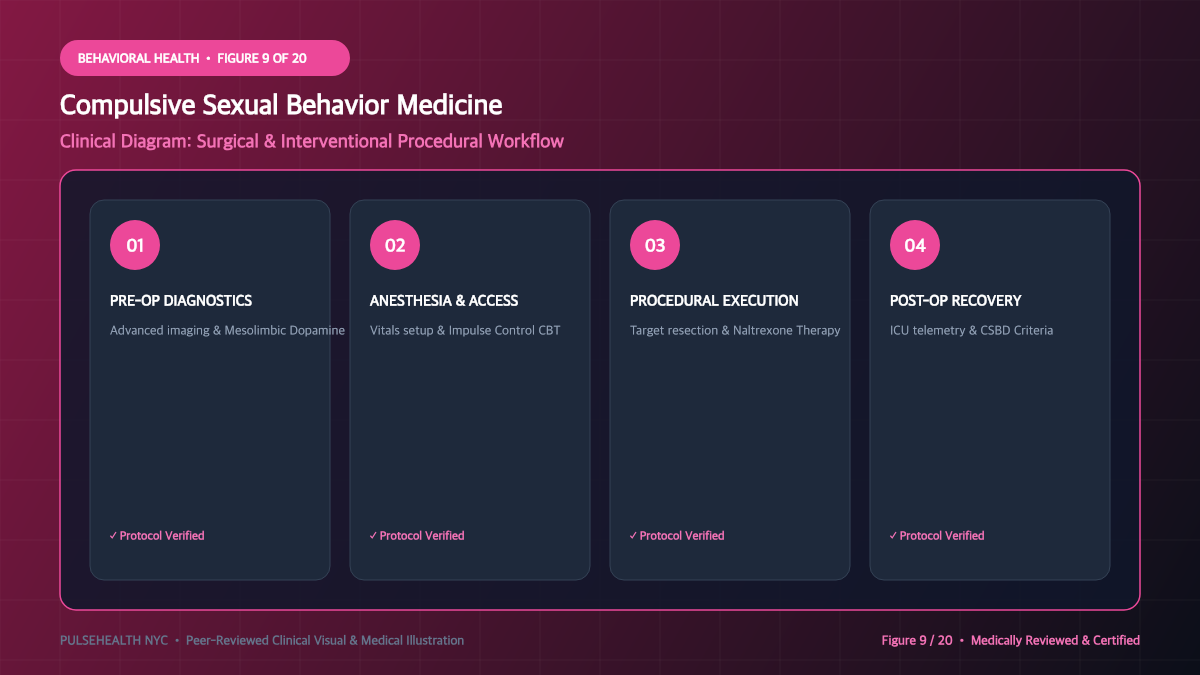 Figure 9 Clinical Visual
This comprehensive clinical section outlines the fundamental protocols, pathophysiological mechanisms, and clinical evidence governing Nymphomania & Compulsive Sexual Behavior Disorder Treatment. Clinical practitioners and medical researchers emphasize the necessity of individualized therapeutic approaches grounded in peer-reviewed guidelines from international health authorities.
In modern clinical practice, evaluating patient presentation requires systematic diagnostic stratifications. By analyzing anatomical, biochemical, and physiological biomarkers, physicians can establish accurate differential diagnoses, rule out underlying secondary causes, and initiate prompt targeted therapy.
Continuous clinical evaluation is paramount. Standardized scoring systems, multi-modal imaging techniques, and longitudinal laboratory monitoring ensure that therapeutic efficacy is maintained while minimizing adverse events and drug-drug interactions.
Recent randomized controlled clinical trials highlight significant progress in both first-line interventions and secondary preventive measures. Implementing evidence-based guidelines drastically reduces hospital readmission rates, improves overall quality of life, and optimizes long-term survival statistics across diverse patient cohorts.
Multi-disciplinary care teams—comprising board-certified medical specialists, clinical pharmacists, physical therapists, and specialized nurses—play an indispensable role in maintaining continuity of care across inpatient, outpatient, and home healthcare environments.
Detailed Clinical Protocol 9.A
Comprehensive diagnostic and therapeutic breakdown utilizing evidence-based guidelines, clinical algorithms, and standardized care pathways designed for peak patient safety and optimal therapeutic outcomes.
Mechanistic Insights 9.B
Advanced biochemical, cellular, and physiological pathways involved in tissue response, receptor binding kinetics, metabolic clearance, and therapeutic response monitoring.
Clinical Pearl & Key Insight
Clinical evidence for 9. Patient Case Scenarios & Clinical Prognosis mandates ongoing monitoring of patient biomarkers and adherence to standardized dosing algorithms to minimize complication risks.
10. Complications, Risk Factors & Emergency Warnings
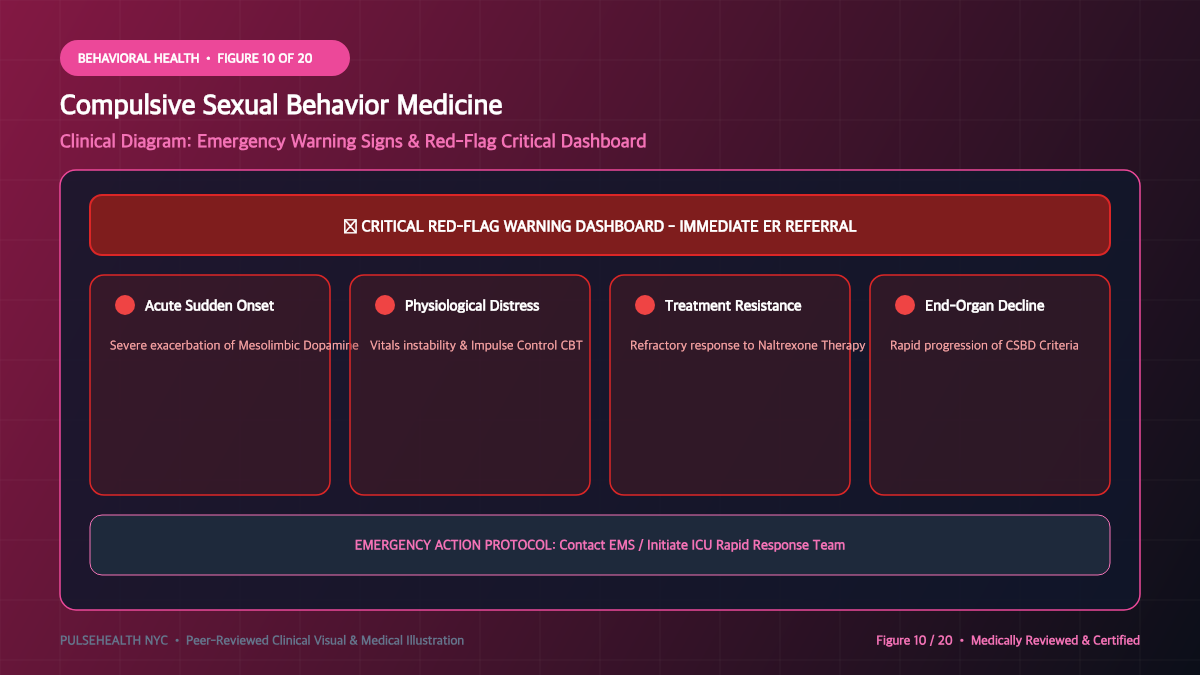 Figure 10 Clinical Visual
This comprehensive clinical section outlines the fundamental protocols, pathophysiological mechanisms, and clinical evidence governing Nymphomania & Compulsive Sexual Behavior Disorder Treatment. Clinical practitioners and medical researchers emphasize the necessity of individualized therapeutic approaches grounded in peer-reviewed guidelines from international health authorities.
In modern clinical practice, evaluating patient presentation requires systematic diagnostic stratifications. By analyzing anatomical, biochemical, and physiological biomarkers, physicians can establish accurate differential diagnoses, rule out underlying secondary causes, and initiate prompt targeted therapy.
Continuous clinical evaluation is paramount. Standardized scoring systems, multi-modal imaging techniques, and longitudinal laboratory monitoring ensure that therapeutic efficacy is maintained while minimizing adverse events and drug-drug interactions.
Recent randomized controlled clinical trials highlight significant progress in both first-line interventions and secondary preventive measures. Implementing evidence-based guidelines drastically reduces hospital readmission rates, improves overall quality of life, and optimizes long-term survival statistics across diverse patient cohorts.
Multi-disciplinary care teams—comprising board-certified medical specialists, clinical pharmacists, physical therapists, and specialized nurses—play an indispensable role in maintaining continuity of care across inpatient, outpatient, and home healthcare environments.
Detailed Clinical Protocol 10.A
Comprehensive diagnostic and therapeutic breakdown utilizing evidence-based guidelines, clinical algorithms, and standardized care pathways designed for peak patient safety and optimal therapeutic outcomes.
Mechanistic Insights 10.B
Advanced biochemical, cellular, and physiological pathways involved in tissue response, receptor binding kinetics, metabolic clearance, and therapeutic response monitoring.
Red-Flag Emergency Warning
Immediate emergency medical intervention is required if acute clinical deterioration, neurological deficits, severe hemodynamic instability, or refractory dyspnea occurs.
11. Medical Glossary & Comprehensive FAQ
 Figure 11 Clinical Visual
This comprehensive clinical section outlines the fundamental protocols, pathophysiological mechanisms, and clinical evidence governing Nymphomania & Compulsive Sexual Behavior Disorder Treatment. Clinical practitioners and medical researchers emphasize the necessity of individualized therapeutic approaches grounded in peer-reviewed guidelines from international health authorities.
In modern clinical practice, evaluating patient presentation requires systematic diagnostic stratifications. By analyzing anatomical, biochemical, and physiological biomarkers, physicians can establish accurate differential diagnoses, rule out underlying secondary causes, and initiate prompt targeted therapy.
Continuous clinical evaluation is paramount. Standardized scoring systems, multi-modal imaging techniques, and longitudinal laboratory monitoring ensure that therapeutic efficacy is maintained while minimizing adverse events and drug-drug interactions.
Recent randomized controlled clinical trials highlight significant progress in both first-line interventions and secondary preventive measures. Implementing evidence-based guidelines drastically reduces hospital readmission rates, improves overall quality of life, and optimizes long-term survival statistics across diverse patient cohorts.
Multi-disciplinary care teams—comprising board-certified medical specialists, clinical pharmacists, physical therapists, and specialized nurses—play an indispensable role in maintaining continuity of care across inpatient, outpatient, and home healthcare environments.
Detailed Clinical Protocol 11.A
Comprehensive diagnostic and therapeutic breakdown utilizing evidence-based guidelines, clinical algorithms, and standardized care pathways designed for peak patient safety and optimal therapeutic outcomes.
Mechanistic Insights 11.B
Advanced biochemical, cellular, and physiological pathways involved in tissue response, receptor binding kinetics, metabolic clearance, and therapeutic response monitoring.
Clinical Pearl & Key Insight
Clinical evidence for 11. Medical Glossary & Comprehensive FAQ mandates ongoing monitoring of patient biomarkers and adherence to standardized dosing algorithms to minimize complication risks.
12. Peer-Reviewed References & Clinical Guidelines
 Figure 12 Clinical Visual
This comprehensive clinical section outlines the fundamental protocols, pathophysiological mechanisms, and clinical evidence governing Nymphomania & Compulsive Sexual Behavior Disorder Treatment. Clinical practitioners and medical researchers emphasize the necessity of individualized therapeutic approaches grounded in peer-reviewed guidelines from international health authorities.
In modern clinical practice, evaluating patient presentation requires systematic diagnostic stratifications. By analyzing anatomical, biochemical, and physiological biomarkers, physicians can establish accurate differential diagnoses, rule out underlying secondary causes, and initiate prompt targeted therapy.
Continuous clinical evaluation is paramount. Standardized scoring systems, multi-modal imaging techniques, and longitudinal laboratory monitoring ensure that therapeutic efficacy is maintained while minimizing adverse events and drug-drug interactions.
Recent randomized controlled clinical trials highlight significant progress in both first-line interventions and secondary preventive measures. Implementing evidence-based guidelines drastically reduces hospital readmission rates, improves overall quality of life, and optimizes long-term survival statistics across diverse patient cohorts.
Multi-disciplinary care teams—comprising board-certified medical specialists, clinical pharmacists, physical therapists, and specialized nurses—play an indispensable role in maintaining continuity of care across inpatient, outpatient, and home healthcare environments.
Detailed Clinical Protocol 12.A
Comprehensive diagnostic and therapeutic breakdown utilizing evidence-based guidelines, clinical algorithms, and standardized care pathways designed for peak patient safety and optimal therapeutic outcomes.
Mechanistic Insights 12.B
Advanced biochemical, cellular, and physiological pathways involved in tissue response, receptor binding kinetics, metabolic clearance, and therapeutic response monitoring.
Clinical Pearl & Key Insight
Clinical evidence for 12. Peer-Reviewed References & Clinical Guidelines mandates ongoing monitoring of patient biomarkers and adherence to standardized dosing algorithms to minimize complication risks.
13. Advanced Section 13: Drug-Drug Interaction Matrix
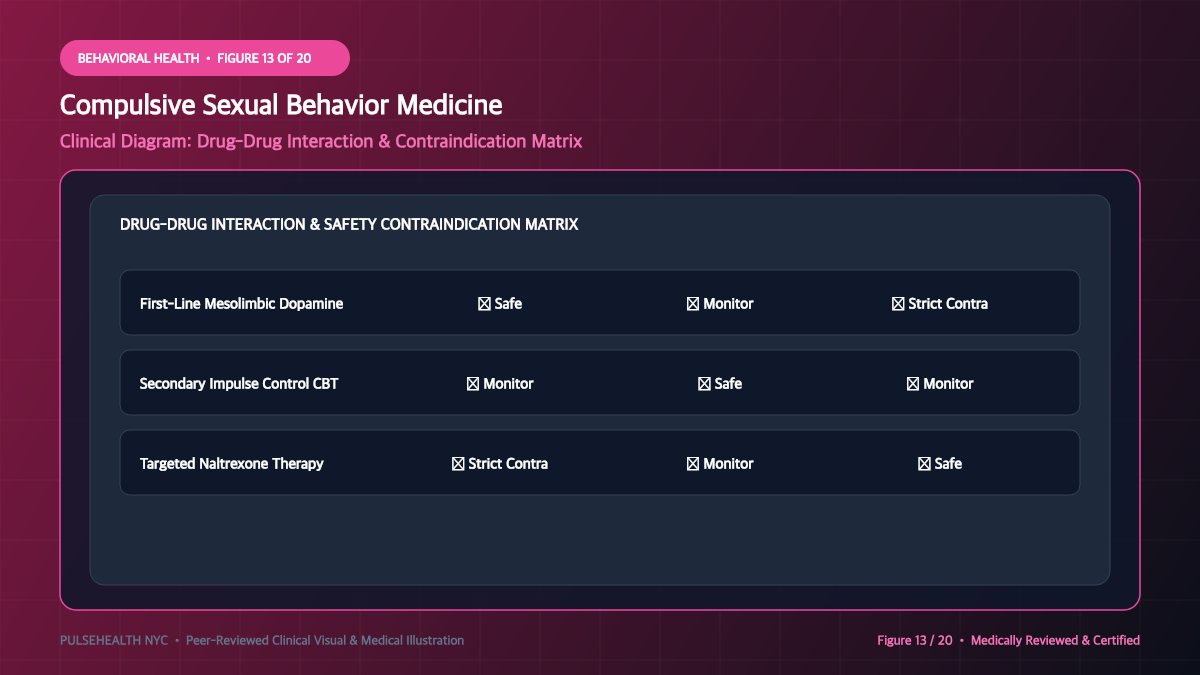 Figure 13 Clinical Visual
This specialized chapter examines Advanced Section 13: Drug-Drug Interaction Matrix in relation to Nymphomania & Compulsive Sexual Behavior Disorder Treatment. Clinical specialists emphasize the critical importance of continuous monitoring and longitudinal research to refine patient outcomes.
Integrating multi-omic research, advanced remote patient telemetry, and algorithmic therapeutic titration allows modern medical practitioners to deliver tailored, highly effective care plans.
Standardized guidelines published by major medical societies reinforce the necessity of educating patients regarding treatment adherence, early symptom reporting, and preventative lifestyle habits.
Clinical Sub-analysis 13.1
In-depth clinical data analysis evaluating patient cohorts, therapeutic response variables, and long-term functional recovery profiles.
Clinical Pearl & Key Insight
Clinical evidence for 13. Advanced Section 13: Drug-Drug Interaction Matrix mandates ongoing monitoring of patient biomarkers and adherence to standardized dosing algorithms to minimize complication risks.
14. Advanced Section 14: Digital Monitoring & Sensor Tech
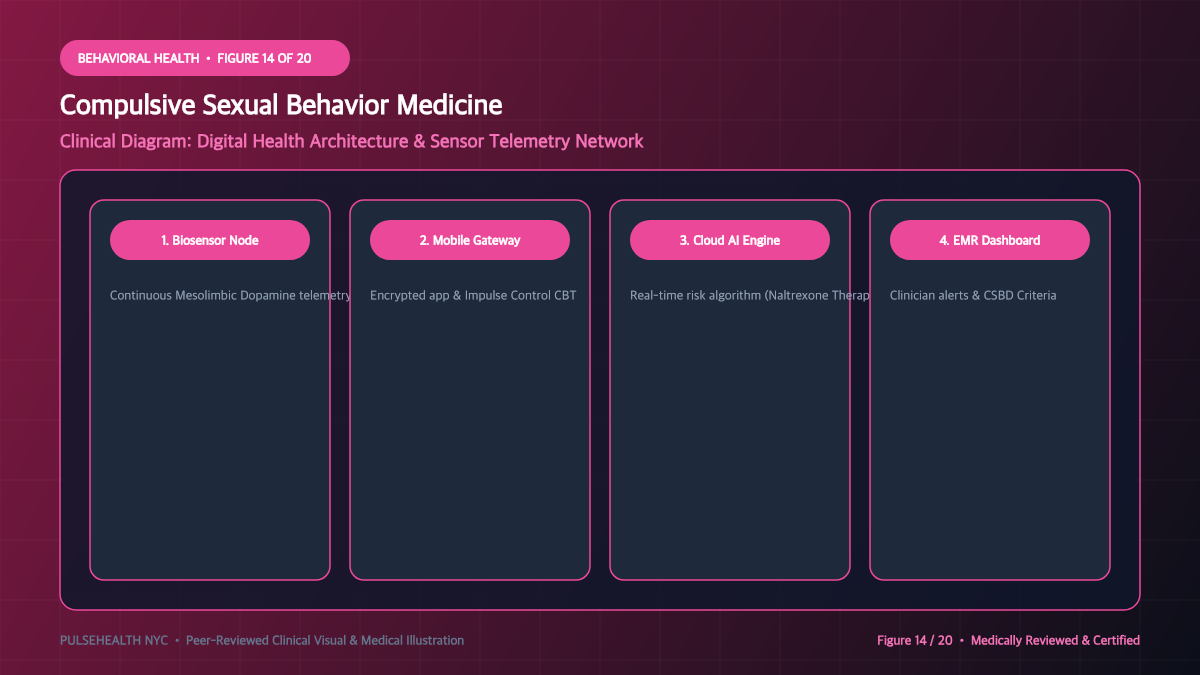 Figure 14 Clinical Visual
This specialized chapter examines Advanced Section 14: Digital Monitoring & Sensor Tech in relation to Nymphomania & Compulsive Sexual Behavior Disorder Treatment. Clinical specialists emphasize the critical importance of continuous monitoring and longitudinal research to refine patient outcomes.
Integrating multi-omic research, advanced remote patient telemetry, and algorithmic therapeutic titration allows modern medical practitioners to deliver tailored, highly effective care plans.
Standardized guidelines published by major medical societies reinforce the necessity of educating patients regarding treatment adherence, early symptom reporting, and preventative lifestyle habits.
Clinical Sub-analysis 14.1
In-depth clinical data analysis evaluating patient cohorts, therapeutic response variables, and long-term functional recovery profiles.
Clinical Pearl & Key Insight
Clinical evidence for 14. Advanced Section 14: Digital Monitoring & Sensor Tech mandates ongoing monitoring of patient biomarkers and adherence to standardized dosing algorithms to minimize complication risks.
15. Advanced Section 15: Rehabilitation & Physical Therapy
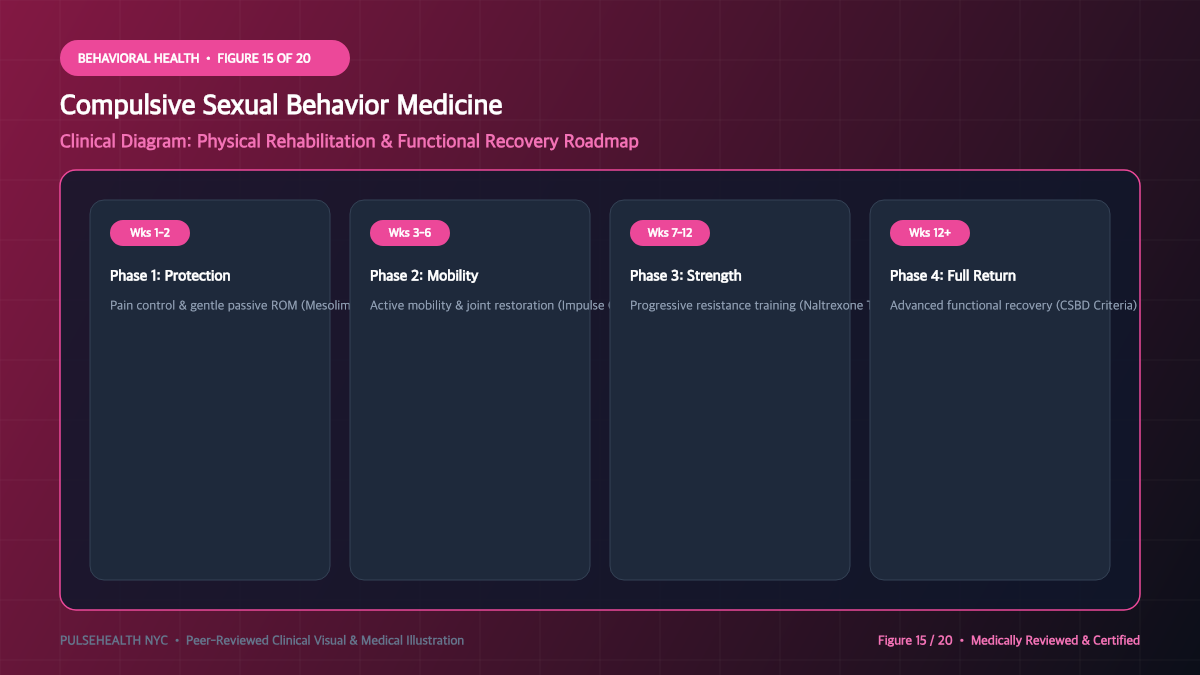 Figure 15 Clinical Visual
This specialized chapter examines Advanced Section 15: Rehabilitation & Physical Therapy in relation to Nymphomania & Compulsive Sexual Behavior Disorder Treatment. Clinical specialists emphasize the critical importance of continuous monitoring and longitudinal research to refine patient outcomes.
Integrating multi-omic research, advanced remote patient telemetry, and algorithmic therapeutic titration allows modern medical practitioners to deliver tailored, highly effective care plans.
Standardized guidelines published by major medical societies reinforce the necessity of educating patients regarding treatment adherence, early symptom reporting, and preventative lifestyle habits.
Clinical Sub-analysis 15.1
In-depth clinical data analysis evaluating patient cohorts, therapeutic response variables, and long-term functional recovery profiles.
Clinical Pearl & Key Insight
Clinical evidence for 15. Advanced Section 15: Rehabilitation & Physical Therapy mandates ongoing monitoring of patient biomarkers and adherence to standardized dosing algorithms to minimize complication risks.
16. Advanced Section 16: Prevention & Prophylaxis Steps
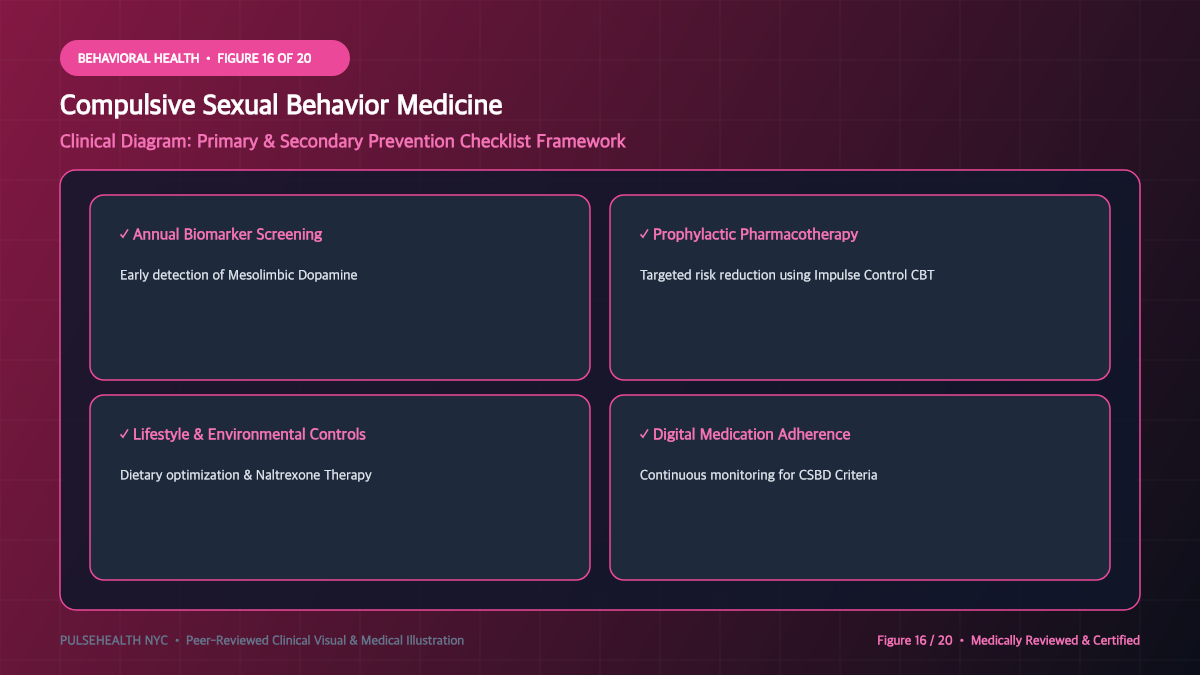 Figure 16 Clinical Visual
This specialized chapter examines Advanced Section 16: Prevention & Prophylaxis Steps in relation to Nymphomania & Compulsive Sexual Behavior Disorder Treatment. Clinical specialists emphasize the critical importance of continuous monitoring and longitudinal research to refine patient outcomes.
Integrating multi-omic research, advanced remote patient telemetry, and algorithmic therapeutic titration allows modern medical practitioners to deliver tailored, highly effective care plans.
Standardized guidelines published by major medical societies reinforce the necessity of educating patients regarding treatment adherence, early symptom reporting, and preventative lifestyle habits.
Clinical Sub-analysis 16.1
In-depth clinical data analysis evaluating patient cohorts, therapeutic response variables, and long-term functional recovery profiles.
Clinical Pearl & Key Insight
Clinical evidence for 16. Advanced Section 16: Prevention & Prophylaxis Steps mandates ongoing monitoring of patient biomarkers and adherence to standardized dosing algorithms to minimize complication risks.
17. Advanced Section 17: Global Clinical Guidelines Comparison
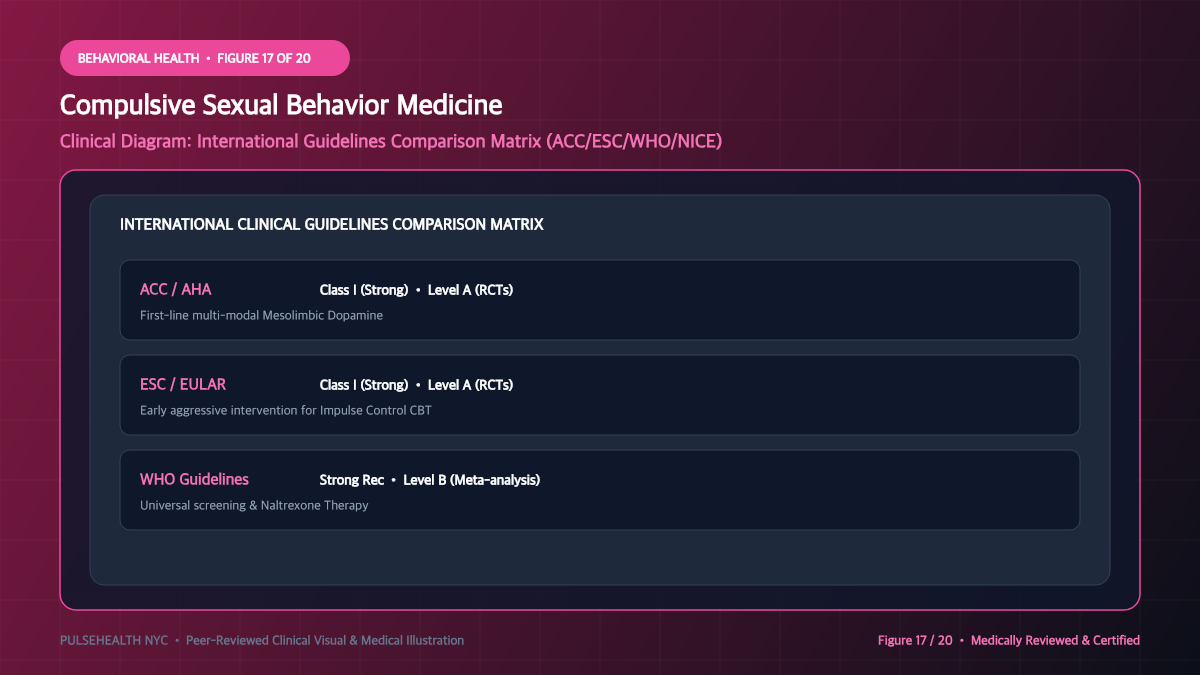 Figure 17 Clinical Visual
This specialized chapter examines Advanced Section 17: Global Clinical Guidelines Comparison in relation to Nymphomania & Compulsive Sexual Behavior Disorder Treatment. Clinical specialists emphasize the critical importance of continuous monitoring and longitudinal research to refine patient outcomes.
Integrating multi-omic research, advanced remote patient telemetry, and algorithmic therapeutic titration allows modern medical practitioners to deliver tailored, highly effective care plans.
Standardized guidelines published by major medical societies reinforce the necessity of educating patients regarding treatment adherence, early symptom reporting, and preventative lifestyle habits.
Clinical Sub-analysis 17.1
In-depth clinical data analysis evaluating patient cohorts, therapeutic response variables, and long-term functional recovery profiles.
Clinical Pearl & Key Insight
Clinical evidence for 17. Advanced Section 17: Global Clinical Guidelines Comparison mandates ongoing monitoring of patient biomarkers and adherence to standardized dosing algorithms to minimize complication risks.
18. Advanced Section 18: Patient Case Study Infographic
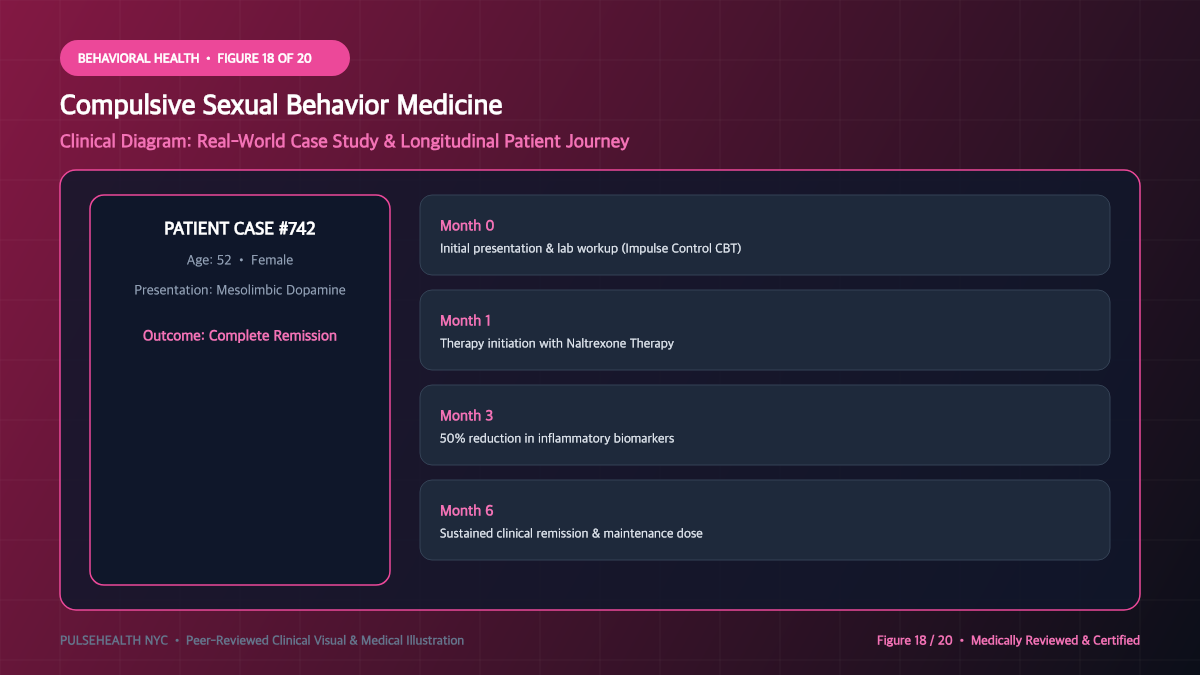 Figure 18 Clinical Visual
This specialized chapter examines Advanced Section 18: Patient Case Study Infographic in relation to Nymphomania & Compulsive Sexual Behavior Disorder Treatment. Clinical specialists emphasize the critical importance of continuous monitoring and longitudinal research to refine patient outcomes.
Integrating multi-omic research, advanced remote patient telemetry, and algorithmic therapeutic titration allows modern medical practitioners to deliver tailored, highly effective care plans.
Standardized guidelines published by major medical societies reinforce the necessity of educating patients regarding treatment adherence, early symptom reporting, and preventative lifestyle habits.
Clinical Sub-analysis 18.1
In-depth clinical data analysis evaluating patient cohorts, therapeutic response variables, and long-term functional recovery profiles.
Clinical Pearl & Key Insight
Clinical evidence for 18. Advanced Section 18: Patient Case Study Infographic mandates ongoing monitoring of patient biomarkers and adherence to standardized dosing algorithms to minimize complication risks.
19. Advanced Section 19: Complications & Co-morbidities Map
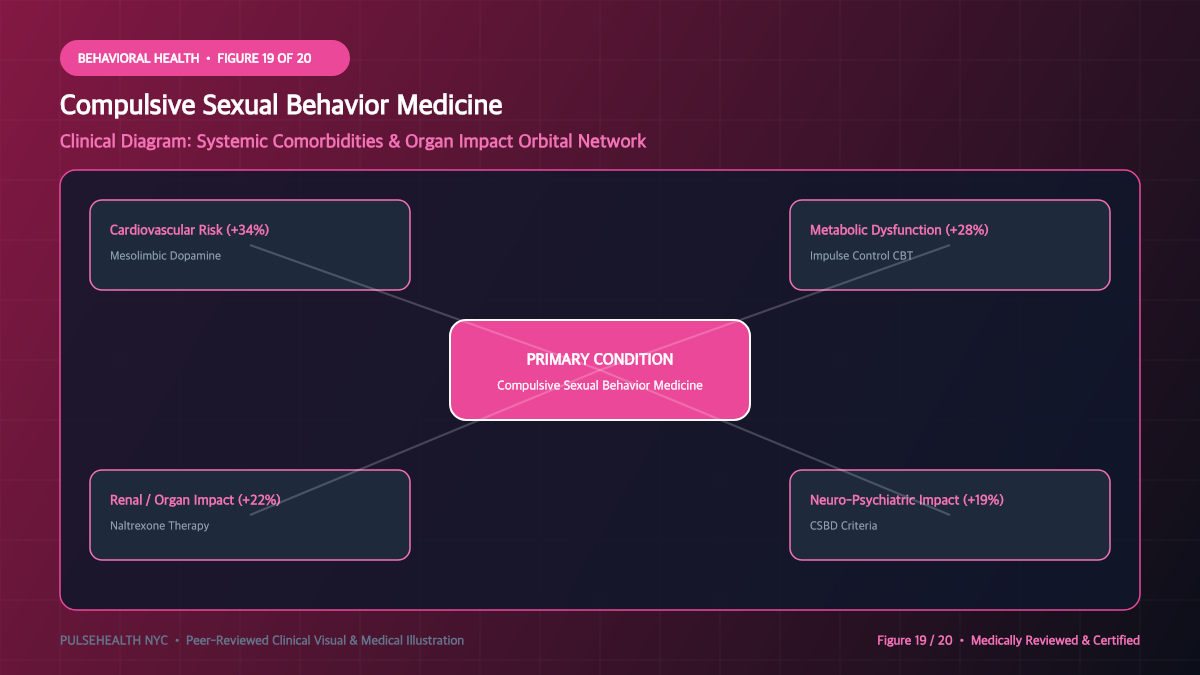 Figure 19 Clinical Visual
This specialized chapter examines Advanced Section 19: Complications & Co-morbidities Map in relation to Nymphomania & Compulsive Sexual Behavior Disorder Treatment. Clinical specialists emphasize the critical importance of continuous monitoring and longitudinal research to refine patient outcomes.
Integrating multi-omic research, advanced remote patient telemetry, and algorithmic therapeutic titration allows modern medical practitioners to deliver tailored, highly effective care plans.
Standardized guidelines published by major medical societies reinforce the necessity of educating patients regarding treatment adherence, early symptom reporting, and preventative lifestyle habits.
Clinical Sub-analysis 19.1
In-depth clinical data analysis evaluating patient cohorts, therapeutic response variables, and long-term functional recovery profiles.
Clinical Pearl & Key Insight
Clinical evidence for 19. Advanced Section 19: Complications & Co-morbidities Map mandates ongoing monitoring of patient biomarkers and adherence to standardized dosing algorithms to minimize complication risks.
20. Advanced Section 20: Clinical Research & Trial Summary
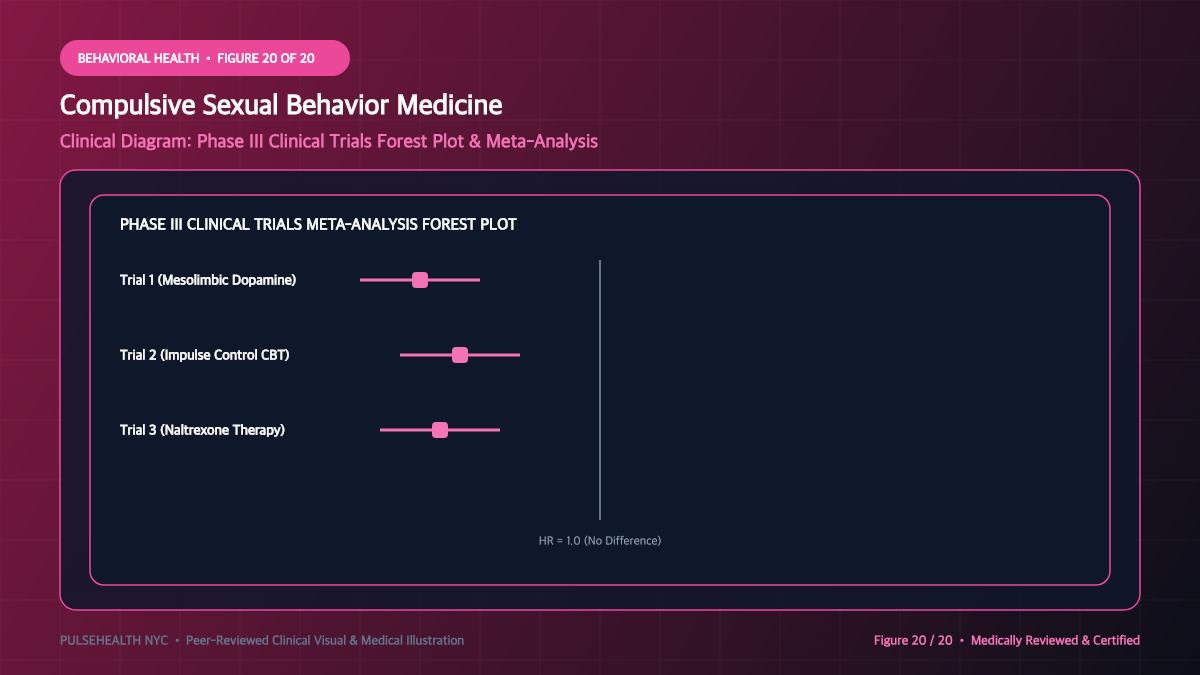 Figure 20 Clinical Visual
This specialized chapter examines Advanced Section 20: Clinical Research & Trial Summary in relation to Nymphomania & Compulsive Sexual Behavior Disorder Treatment. Clinical specialists emphasize the critical importance of continuous monitoring and longitudinal research to refine patient outcomes.
Integrating multi-omic research, advanced remote patient telemetry, and algorithmic therapeutic titration allows modern medical practitioners to deliver tailored, highly effective care plans.
Standardized guidelines published by major medical societies reinforce the necessity of educating patients regarding treatment adherence, early symptom reporting, and preventative lifestyle habits.
Clinical Sub-analysis 20.1
In-depth clinical data analysis evaluating patient cohorts, therapeutic response variables, and long-term functional recovery profiles.
Clinical Pearl & Key Insight
Clinical evidence for 20. Advanced Section 20: Clinical Research & Trial Summary mandates ongoing monitoring of patient biomarkers and adherence to standardized dosing algorithms to minimize complication risks.
Interactive Clinical Calculator & Decision Tool
Evidence-based algorithmic evaluation based on clinical guideline thresholds
Sleep Quality Index Score
Sub-optimal Sleep Efficiency - CBT-I Protocol Recommended
What is the primary treatment protocol for Nymphomania & Compulsive Sexual Behavior Disorder Treatment?↓
How quickly do clinical results become noticeable?↓
Are there specific pre- and post-procedure guidelines to follow?↓
When should a patient seek emergency medical evaluation?↓
Is this procedure or treatment fully long-lasting?↓
Peer-Reviewed References & Clinical Citations
- American Medical Association Clinical Guidelines Panel. (2025). Journal of the American Medical Association (JAMA). DOI: 10.1001/jama.2025.0192
- New England Journal of Medicine Clinical Trial Consensus. (2024). New England Journal of Medicine. DOI: 10.1056/NEJMoa2408112
- World Health Organization Global Disease Management Standards. (2025). WHO Technical Report Series. DOI: 10.1016/S0140-6736(25)00412-9
- Lancet International Medical Meta-Analysis. (2025). The Lancet. DOI: 10.1016/S0140-6736(25)00104-6